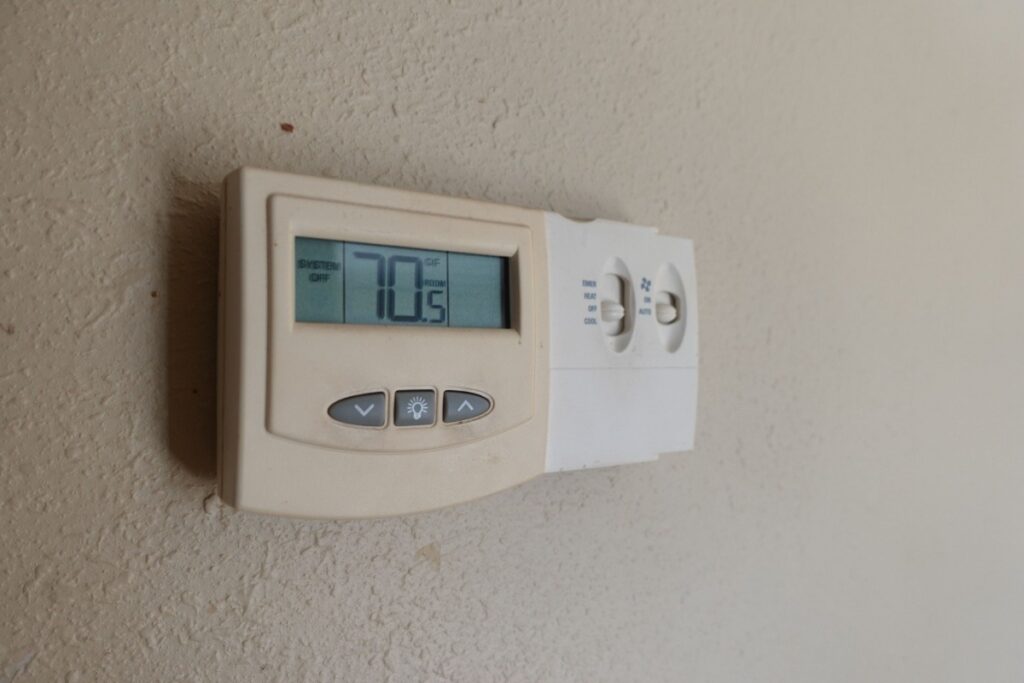
If you have ever stood in front of your thermostat and wondered which fan setting makes the most sense, you are not alone. The choice between “auto” and “on” can feel minor, but it plays a meaningful role in comfort, energy use, and long-term system health. Understanding how each setting works can help you make a smarter decision for your home and your HVAC system.
Understanding How the HVAC Fan Works
The fan inside your HVAC system moves air through the ductwork and across critical components, such as the evaporator coil. That airflow distributes heated or cooled air throughout your home and pushes air through the air filter for filtration.
The fan setting on your thermostat controls when that fan runs. While the cooling or heating cycle depends on temperature demand, the fan setting determines how often air continues to circulate.
What “Auto” Means on Your Thermostat
When the fan is set to auto, it only runs during an active heating or cooling cycle. Once the furnace, heat pump, or air conditioning system reaches the target temperature, the fan shuts off. This setting is the most common default because it aligns fan operation with system demand and limits unnecessary runtime.
What “On” Means on Your Thermostat
When set to on, the fan runs continuously, even when the system is not actively heating or cooling. Air keeps moving through the duct system at a consistent speed, circulating throughout the home. This setting changes how air moves, how moisture behaves, and how often components operate.
Pros and Cons of the Auto Fan Setting
For many homeowners, auto strikes a balance between comfort and efficiency. It is designed to support normal operation without placing extra demand on system components.
Benefits of Using Auto
Auto offers several practical advantages for everyday use:
- Lower energy consumption since the fan only runs when needed
- Reduced wear on the fan motor and internal components
- Quieter operation between heating and cooling cycles
Because the fan cycles less often, this setting can also support the manufacturer’s warranty terms for normal use.
Drawbacks to Consider
With auto, air circulation stops between cycles. This can lead to uneven temperatures in homes with multiple levels or long duct runs. Auto may also limit continuous filtration since air only passes through the air filter during active heating or cooling.
Pros and Cons of the On Fan Setting
Setting the fan to on changes how your system interacts with air quality, humidity, and comfort. This option can be helpful in certain homes but may not suit every situation.
Benefits of Using On
Continuous airflow offers specific advantages:
- More consistent temperature throughout the home
- Improved filtration since air moves through the filter constantly
- Better mixing of air in homes with hot or cold spots
In homes with enhanced filtration systems or sensitive indoor air quality concerns, running the fan continuously can help reduce dust and airborne particles.
Potential Downsides
Running the fan continuously increases energy use. Even at a low speed, the fan motor draws power around the clock.
Continuous airflow can also reintroduce moisture into the air during cooling seasons. When the evaporator coil collects moisture, the fan may blow some of that moisture back into the living space after the cooling cycle ends. This can raise humidity levels rather than lower them, even if you use a dehumidifier.
How Fan Settings Affect Humidity and Comfort
Humidity plays a major role in comfort, especially in warmer months. The fan setting influences how moisture behaves inside your HVAC system.
When cooling runs, moisture condenses on the evaporator coil. With auto, that moisture has time to drain away once the system shuts off. With the on setting, the fan continues to move air across the coil, which can push moisture back into the duct system.
Homes that already struggle with high humidity may feel less comfortable with the fan set to on. This can affect perceived temperature and overall indoor air quality.
Impact on Energy Use and System Longevity
Energy efficiency is one of the biggest factors homeowners consider when adjusting thermostat settings. The fan setting directly impacts energy use and component lifespan.
Energy Considerations
While the fan uses less energy than a compressor or furnace burner, constant operation adds up over time. Homes with older systems or less efficient motors may notice a larger increase in energy costs. Auto limits runtime and helps keep energy use predictable, especially during mild weather when heating and cooling cycles are shorter.
Wear on HVAC Components
More runtime means more wear on the fan motor, bearings, and electrical components. Over time, this can contribute to earlier service needs. Running the fan continuously may be beneficial in some scenarios, but it is important to balance comfort goals with long-term system health.
Choosing the Right Setting for Your Home
There is no single fan setting that works best for every home. Factors like layout, humidity levels, air quality goals, and system design all play a role.
Some homeowners use auto most of the year and switch to on during seasons when airflow consistency matters more. Others prefer auto full-time to limit energy use and component wear.
The key is understanding how your specific HVAC system responds and adjusting settings intentionally rather than by guesswork.
Talk With a Schneider Mechanical Expert About Your HVAC Fan Settings
If you are unsure which fan setting fits your home, Schneider Mechanical can help. Our team evaluates your HVAC system, duct layout, and comfort concerns to provide clear, tailored guidance for your space.
From airflow and filtration questions to humidity control and system performance, our experts are ready to help you make informed decisions. Contact Schneider Mechanical today to schedule a service visit or consultation and get personalized advice that supports comfort, efficiency, and long-term reliability.